
Table of Contents
- Why Natural Alternatives to Paraffin Wax Matter
- Beeswax Candles vs. Paraffin Candles
- Soy Wax vs. Paraffin Candles
- Coconut Wax and Other Plant-Based Options
- The Healthiest Candle Wax for Your Home
- Alternatives to Scented Candles for Fragrance
- Making Your Choice: What Actually Matters
- Frequently Asked Questions
Last Updated: October 11, 2026
Why Natural Alternatives to Paraffin Wax Matter
Paraffin wax dominates the candle market because it's cheap and holds color and fragrance well. But it comes with a trade-off that more people are starting to question: it's petroleum-derived, and when it burns, it can release soot and other combustion byproducts into your home.
If you're looking for a cleaner burn, better scent throw, or a more sustainable choice, natural alternatives to paraffin wax candles exist and have real advantages worth understanding.
Each wax option has distinct performance characteristics. Understanding those differences helps you make a choice that aligns with your values.
Natural waxes burn cleaner, last longer, and throw fragrance as effectively as paraffin. What follows separates one wax from another based on burn quality, environmental impact, cost, and health considerations.
Beeswax Candles vs. Paraffin Candles
Beeswax is the gold standard of natural candle waxes. Produced by honeybees, it burns hotter and longer than paraffin while producing a naturally sweet aroma.
Beeswax candles burn approximately 5 times longer than paraffin candles of the same size and produce a brighter flame with a subtle honey scent. When beeswax burns, it releases negative ions.
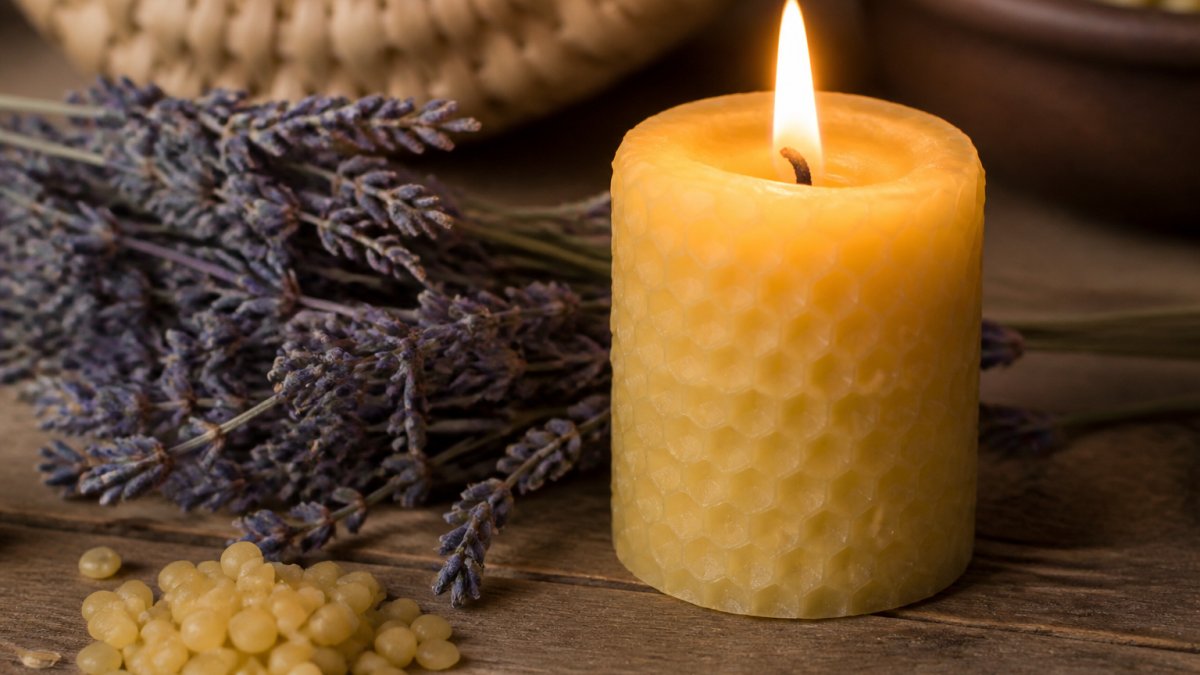
Beeswax costs roughly 3 to 4 times more than paraffin and is less versatile for fragrance blending due to its strong natural scent.
Forth & Nomad's Strawberry Beeswax Birthday Candles are handcrafted from 100% beeswax with cotton wicks and non-carcinogenic, phthalate-free dyes at $32 for a set of 10.

Beeswax pros:
- Burns 5 times longer than paraffin
- Produces a brighter, cleaner flame
- Natural sweet aroma
- Renewable resource
- No soot or harmful emissions
Beeswax cons:
- Significantly higher cost
- Limited fragrance customization
- Can be harder to find
- Requires specific wick sizing
Soy Wax vs. Paraffin Candles
Soy wax is plant-based, renewable, biodegradable, and burns cleaner than paraffin with less soot production.
Soy wax holds fragrance and color effectively and has a slower burn rate than paraffin, extending burn time.
The soy industry has environmental concerns around deforestation and monoculture farming. Soy wax also has weaker scent throw than beeswax, often requiring fragrance oil enhancement for strong fragrance projection.
Soy wax costs more than paraffin but less than beeswax, making it a middle-ground option.
Soy wax pros:
- Plant-based and renewable
- Biodegradable
- Cleaner burn than paraffin
- Good fragrance and color retention
- Moderate pricing
- Supports agricultural economy
Soy wax cons:
- Environmental concerns around farming practices
- Weaker scent throw than beeswax
- Can develop "frosting" (white coating) over time
- Slower burn means candles may not suit all preferences
Coconut Wax and Other Plant-Based Options
Coconut wax is marketed as the most sustainable option, but understanding the tradeoffs is essential.
Coconut wax: the sustainability story and the fine print:
Coconut palms produce oil with minimal pesticide input and thrive without heavy fertilization, making coconut wax lower-impact than paraffin or soy.
Pure coconut wax is rarely used; most "coconut wax" candles are coconut-soy blends (typically 70% coconut, 30% soy) that improve performance but dilute sustainability advantages. Check labels for exact formulations.
Sourcing and supply chain realities:
Coconut production is concentrated in the Philippines, Indonesia, India, and Vietnam, creating supply chain risk and longer shipping distances than domestically grown soy. Some coconut farming has contributed to mangrove deforestation. Ask makers about sourcing transparency.
Soy wax: the sustainability paradox:
Soy farming drives deforestation in South America and requires more pesticide input than coconut. However, soy is grown domestically in the U.S., reducing transportation emissions and supporting local agriculture.
Beeswax: animal-derived but genuinely renewable:
Beeswax is a byproduct of honey production with minimal additional environmental cost. However, it's animal-derived (disqualifying it for vegans) and large-scale commercial beekeeping raises concerns about bee welfare.
Gel wax and synthetic blends:
Gel wax is a synthetic polymer that holds color beautifully but isn't biodegradable and is petroleum-derived, making it poor for environmentally conscious buyers.
Blended formulations and the performance-sustainability tradeoff:
Candle makers blend waxes to optimize performance: coconut-soy balances sustainability with scent throw, beeswax-soy improves burn time while reducing cost, and paraffin-soy reduces environmental impact while keeping prices low.
How to evaluate plant-based candles:
-
Check the formulation, Know whether it's pure or blended, and in what ratio.
-
Ask about sourcing, Reputable makers can identify where their wax comes from.
-
Consider the full product, Shipping distance and production practices matter as much as wax type.
-
Align with your values, If vegan, avoid beeswax. If prioritizing domestic agriculture, choose soy. If wanting minimal land-use impact, choose coconut with verified sourcing.
No plant-based wax is automatically "sustainable." Each has environmental tradeoffs. The most sustainable choice aligns with your specific environmental priorities and supports makers who can document their sourcing.
The Healthiest Candle Wax for Your Home
The question of which wax is "healthiest" requires separating what research actually shows from marketing claims. The honest answer: wax type is only one factor in candle emissions, and the evidence is more nuanced than most articles suggest.
What the research actually establishes:
Paraffin wax itself does not inherently produce toxic fumes. When paraffin burns, it undergoes combustion like any organic material. The byproducts, carbon dioxide and water vapor, are the same as beeswax or soy. However, paraffin candles can produce visible soot (black particulate matter) more readily than natural waxes, particularly if the wick is too thick, trimmed poorly, or if the candle burns in a drafty environment. This soot is primarily unburned carbon, not a toxin, but it can accumulate on walls and ceilings and may irritate airways in people with asthma or respiratory sensitivity.
Beeswax and soy wax produce less visible soot under normal burning conditions. This is a real, observable difference. However, the health significance of occasional soot exposure in a home setting remains understudied.
The wick and fragrance story:
Wax type is not the primary driver of candle emissions. Wick material and fragrance load matter more. Lead-core wicks (now banned in the U.S. for consumer candles under the Candle Safety Act) were the actual health concern (CPSC Bans Candles With Lead-Cored Wicks). Cotton wicks, which are standard in quality candles regardless of wax type, burn cleanly. Fragrance oils, whether synthetic or essential oil-based, off-gas during burning and can release volatile organic compounds (VOCs) into the air.
Practical guidance for cleaner burning:
If indoor air quality is your concern, prioritize these factors in order:
-
Wick quality and trimming, Trim wicks to 1/4 inch before each burn. A thick, untrimmed wick produces more soot than wax type ever will. Use cotton or paper-core wicks.
-
Fragrance load, Lightly scented or unscented candles produce fewer emissions than heavily fragranced ones. If you want fragrance, essential oil-based scents typically off-gas less aggressively than synthetic fragrance oils, though both release VOCs.
-
Burn duration and ventilation, Burn candles for no more than 4 hours at a time. Ensure the room has adequate air circulation. A candle in a sealed bedroom will accumulate more emissions than one in a well-ventilated living space.
-
Wax type, Choose beeswax or soy as a secondary consideration. Both burn cleaner than paraffin, but the difference is modest compared to the impact of wick and fragrance choices.
The claim about negative ions:
Beeswax is sometimes marketed as releasing negative ions that "purify" air. While beeswax does release a small amount of negative ions when burned, the quantity is negligible compared to what would be needed to measurably affect indoor air quality. This claim lacks credible scientific support and should not be a primary factor in your decision.
Bottom line for health-conscious buyers:
If you're concerned about indoor air quality, you're not choosing between wax types, you're choosing a well-made candle with a cotton wick, minimal fragrance, and proper burning practices. A premium beeswax candle with a thick wick and heavy fragrance load will perform worse than a simple soy candle with a thin cotton wick and no added scent. The candle system matters far more than the wax alone.
Alternatives to Scented Candles for Fragrance
Not everyone wants to burn candles, even natural ones. If you're looking to create ambiance and fragrance without the combustion considerations, several alternatives exist.
Essential oil diffusers offer scent without flame or wax. Room sprays provide instant fragrance. Simmer pots, combining water, spices, and citrus peels on a stove, create natural fragrance and humidity. Palo Santo sticks and incense offer ritualistic fragrance experiences. Even fresh flowers and plants naturally scent a space.
Each option trades something. Diffusers require electricity. Room sprays are temporary. Simmer pots need monitoring. But for people concerned about any aspect of candle burning, these alternatives deserve consideration.
The advantage of natural alternatives to paraffin wax candles remains: they combine ambiance, fragrance, and sustainability in a single product.
Making Your Choice: What Actually Matters
Here's the decision framework that cuts through the noise.
Choose beeswax if: You want the longest burn time, the cleanest flame, and you prioritize performance over cost. You're willing to pay premium prices for a product that delivers on longevity and natural properties.
Choose soy wax if: You want a sustainable, plant-based option that balances environmental impact with reasonable pricing and good fragrance retention. You're comfortable with a moderate burn time and cleaner emissions than paraffin.
Choose coconut wax blends if: You want a newer, highly sustainable option and don't mind that it's typically blended with other waxes. You're interested in supporting innovative agricultural practices.
Stick with paraffin if: Cost is your primary concern and you're not worried about combustion byproducts or sustainability. Paraffin performs well for colored, heavily scented candles at low prices.
| Wax Type | Burn Time | Scent Throw | Cost | Sustainability | Best For |
|---|---|---|---|---|---|
| Beeswax | 5x longer | Moderate | Premium | High | Longevity, clean burn |
| Soy | Moderate | Good | Mid-range | High | Balance of performance and sustainability |
| Coconut | Moderate | Moderate | Mid-range | Very High | Eco-conscious buyers |
| Paraffin | Standard | Strong | Low | Low | Budget-conscious shoppers |
The real differentiator isn't the wax alone, it's the entire candle system. Wick quality, fragrance formulation, container, and burning practices all influence performance. A poorly made beeswax candle will underperform a well-crafted soy candle.
When evaluating natural alternatives to paraffin wax candles, look beyond the wax type. Check the wick material (cotton is preferable), the fragrance source (essential oils vs. synthetic), and whether the maker provides burning guidance.
The choice between paraffin and natural alternatives comes down to what you value: cost, burn quality, environmental impact, or indoor air quality. Each natural wax offers a distinct advantage, and none is universally "best." At Forth & Nomad, we believe thoughtful choices about what you bring into your home matter. Our Strawberry Beeswax Birthday Candles exemplify this philosophy, handcrafted from 100% beeswax with non-carcinogenic dyes and cotton wicks, they prioritize clean burning and sustainability. Explore our collection to find the natural candle option that aligns with your values, and discover how intentional design transforms everyday moments into something meaningful.
Frequently Asked Questions
What is the healthiest candle wax to burn?
Beeswax and high-quality soy wax are generally considered healthier options. Beeswax burns cleanly with minimal soot and produces a naturally pleasant scent without fragrance additives. Soy wax, made from renewable soybeans, also burns with less smoke and fewer emissions than paraffin. Both support better indoor air quality compared to petroleum-derived paraffin. The key is choosing candles with natural, phthalate-free fragrances or unscented options, plus cotton or wood wicks rather than lead-core wicks.
Are soy wax candles better than paraffin candles?
Soy wax offers several advantages: it burns more slowly, lasts longer, and produces less soot and smoke than paraffin. Soy is also renewable and biodegradable, making it a more sustainable choice. However, soy candles may not hold fragrance as strongly as paraffin, and quality varies by brand. Paraffin is cheaper and holds scent throw better, but it's petroleum-derived and produces more emissions. For health and environmental reasons, soy wax is the better choice for most households.
Is beeswax a good alternative to paraffin wax?
Yes, beeswax is an excellent alternative. It burns slower and cleaner than paraffin, produces minimal soot, and releases negative ions. Beeswax candles have a naturally pleasant honey scent, so they don't require synthetic fragrance. The main drawback is cost, beeswax candles are significantly more expensive than paraffin. If budget allows, beeswax is one of the finest natural wax choices for quality, longevity, and indoor air quality.
What are healthy alternatives to burning scented candles?
If you want fragrance without candles, consider essential oil diffusers, room sprays, simmer pots with spices and botanicals, or Palo Santo. Simmer pots let you infuse your space with natural scents by heating water with cinnamon, cloves, or citrus peels. Essential oil diffusers offer long-lasting fragrance without combustion byproducts. These alternatives avoid the soot, smoke, and volatile organic compounds that even quality candles can emit, making them ideal if you're sensitive to indoor air quality or prefer fragrance without flame.