

Table of Contents
- The Real Minimalist Wardrobe Benefits
- Minimalist Wardrobe Disadvantages You Should Know
- The Effort Required: What Actually Goes Into This
- How to Build a Minimalist Wardrobe
- Minimalist Wardrobe Essentials for Women
- The Cost-Benefit Reality: When It Makes Sense
- Who Should Actually Try This
- Frequently Asked Questions
Last Updated: October 18, 2026
The Real Minimalist Wardrobe Benefits
A minimalist wardrobe worth the effort delivers tangible wins: less time deciding what to wear, reduced mental clutter, and the freedom to focus on what actually matters. But here's what most guides get wrong, the benefits aren't automatic. They only show up if you build your wardrobe intentionally and stick with it.
The core appeal is straightforward: fewer clothes means fewer decisions. With 30 versatile pieces instead of 150 random items, getting dressed becomes automatic, and the mental bandwidth you save compounds over time.
Beyond convenience, a minimalist wardrobe forces intentionality. Every piece has to earn its place by fitting your life, body, and style, so you end up wearing what you own instead of aspirational items gathering dust.
The confidence shift is real too. When everything works together, you stop second-guessing yourself, and that consistency builds a recognizable personal style, not because you're trying harder, but because you're trying smarter.
When you curate a smaller collection of pieces you genuinely love, you're not just reducing closet clutter, you're defining your aesthetic on your own terms.
Minimalist Wardrobe Disadvantages You Should Know
The minimalist wardrobe approach has real limitations that nobody talks about openly. Pretending they don't exist sets you up to fail.
The biggest issue is adaptability. Life, bodies, seasons, and jobs change. A wardrobe built for your current life becomes a problem when your life doesn't cooperate: own only summer dresses and move somewhere with real winters, or get promoted and need blazers, and you're starting from scratch.
Lifestyle variety creates real friction. If you travel constantly, work multiple jobs, or live with dramatic seasonal swings, you either own pieces that work across all contexts, which limits your options, or keep buying to cover each scenario, which defeats the purpose.
The initial effort is substantial and often underestimated. A functional minimalist wardrobe needs enough variety for real outfit combinations, pieces that work together, laundry-day backups, and seasonal rotation, which works out to 30 to 50 pieces for most people, not the extreme minimalism promoted on social media.
There's also the boredom factor. Some people thrive on outfit variety and creative combinations; wearing the same outfit structure repeatedly feels restrictive. If you love fashion as self-expression and experimentation, a minimalist wardrobe can feel like a cage.
Finally, the cost structure is counterintuitive. Each item works harder, so you need higher-quality pieces; cheap basics wear out fast with constant wear. You spend more upfront to avoid constant replacement, a real barrier if your budget is tight.
The Effort Required: What Actually Goes Into This
Building a minimalist wardrobe worth the effort isn't passive. It requires deliberate work across several stages, and most people underestimate the time investment.
The first phase is honest assessment. Understand your actual life, not the life you wish you had: what you wear, your schedule, climate, and job environment. This takes real reflection, not a 15-minute "I'll just get rid of stuff" approach, and skipping it leaves you with a wardrobe that doesn't fit your reality.
Next comes decluttering. Starting from a full closet, edit ruthlessly: keep what you wear regularly, fits your current body, and aligns with your style. Everything else goes. This isn't a weekend project; it can take weeks of trying things on and letting go emotionally.
Then comes gap-filling. Once you know what you need, identify what's missing, whether neutral basics, professional pieces, or one good pair of jeans, and shop intentionally. Quality matters here because each piece carries more weight.
The final phase is maintenance and rotation: washing more frequently, storing pieces properly so they last, and assessing seasonally whether the wardrobe still fits your life. This isn't a one-time project but an ongoing practice.
Total time varies wildly: 4-6 weeks of active work with moderate clutter and a clear sense of style, or 2-3 months with a packed closet and unclear preferences, before you even start living with the wardrobe and adjusting.
How to Build a Minimalist Wardrobe
Start with your actual life, not Pinterest. Document what you wear for two weeks. Write down your activities, your work environment, your social commitments. This data matters more than any style guide.
Next, identify your color palette: 2-3 neutral base colors, typically black, white, gray, navy, or brown, plus 1-2 accent colors you love. This constraint forces pieces to work together, creating a system where combinations are automatic.
Build around versatile basics. Classic jeans, neutral sweaters, simple blouses, and neutral trousers form the foundation. The Loose Straight Jean from Forth & Nomad, for example, offers that timeless silhouette that pairs with everything from sneakers to boots, the kind of foundational piece that carries weight in a smaller wardrobe.

Then add layering pieces. Cardigans, blazers, and structured tops adapt the same base outfit to different contexts: a tee becomes office-appropriate with a blazer or casual with a cardigan, multiplying combinations without adding closet volume.
Include one quality statement piece per season. This is where you inject personality. It doesn't have to be bold, it's just something that reflects your taste and breaks up the neutral base. Maybe it's a textured sweater like the Lennox Sweater with its distinctive half button-down collar, or a wrap-front top that adds visual interest while remaining versatile.
Invest in fit above all else. Well-fitting clothes look better, feel better, and get worn more, which is where the higher cost makes sense: one perfectly-fitting pair of jeans beats three mediocre pairs you avoid.
Buy one season at a time. Start with what you need now, live with it for a few weeks, then adjust; you'll discover gaps and preferences you couldn't predict.
Minimalist Wardrobe Essentials for Women
The actual essentials depend on your life, but certain pieces show up across most functional minimalist wardrobes.
You need two or three pairs of well-fitting jeans in neutral colors. Jeans are the workhorse of most wardrobes because they bridge casual and semi-professional contexts.
Neutral basics form the foundation: white tee, gray tee, white button-down, neutral sweater. These pieces work alone or layered. They're the canvas everything else builds on.
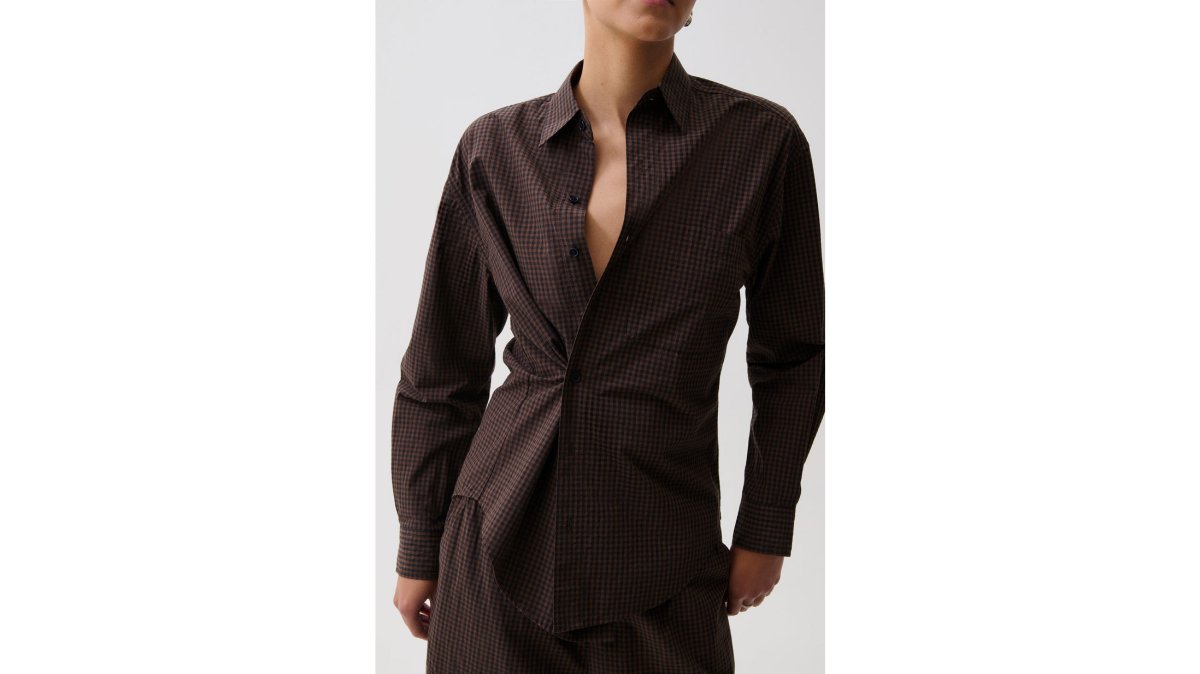
A structured top adds polish. Something like the Mila Button Down Wrap Top, cut from 100% cotton with a wrap-front effect, gives you that office-ready option without requiring a full blazer.

One quality sweater that works across seasons. The Margaux Buttoned Knit Top with its collared neckline and front button closure works for layering or wearing alone, transitioning seamlessly from office to weekend.
One layering piece, a cardigan or structured jacket. This multiplies your outfit combinations by letting you adapt the same base pieces to different contexts and temperatures.
Neutral shoes that work across contexts. Most minimalist wardrobes include one pair of everyday sneakers, one pair of professional flats or heels, and one pair of boots. That covers most situations.
Accessories are optional but powerful. A simple belt, a watch, a neutral bag. These don't take much space but change how outfits feel.
The exact number varies. Some people function with 30 pieces. Others need 50. The magic number is wherever you stop reaching for things that aren't there.
The Cost-Benefit Reality: When It Makes Sense
A minimalist wardrobe worth the effort isn't universally cheaper. That's the first thing to understand. It can be more expensive upfront, though the long-term math often works in your favor.
The upfront cost is real: building a functional minimalist wardrobe with quality pieces typically costs $800 to $2,000 depending on your needs and where you shop. If your budget is $50 per month on clothing, that feels impossible.
But the math shifts. Once the wardrobe is functional, you stop replacing worn-out fast fashion, impulse-buying, and chasing trends. Many people report spending 50-70% less on clothing annually once it's established.
The break-even point varies. If you were spending $200 per month on clothing before, you might break even in 4-6 months. If you were spending $50 per month, it takes longer. But the financial case usually works if you're planning to keep the wardrobe for at least a year.
Beyond the financial calculation, there's time savings. Spending 30 minutes every morning deciding what to wear adds up to 3+ hours per week, or 150+ hours a year. What's that worth to you?
The environmental argument is real but secondary. Fewer, higher-quality pieces mean less waste, but the benefit disappears if you buy expensive pieces you don't actually wear.
The confidence and mental clarity benefits are harder to quantify but genuinely valuable. Less decision fatigue means more mental energy for things that matter. That's not nothing, but it's also not a financial calculation.
Who Should Actually Try This
A minimalist wardrobe works best for specific people in specific situations. Being honest about whether that's you matters.
If your life is stable, same job, same climate, predictable schedule, a minimalist wardrobe is easier to maintain. You know what you need, and those needs don't shift constantly.
If you have a clear personal style or are willing to develop one, you'll succeed faster.
If you have the upfront budget to invest in quality pieces, the transition is smoother. If you're living paycheck to paycheck, the initial cost barrier is real.
If you enjoy the process of curation and intentionality, you'll find this satisfying. If you find it restrictive or boring, you'll abandon it within weeks.
If you work in a context where personal style matters, creative fields, client-facing roles, fashion-adjacent industries, you might need more variety than a strict minimalist wardrobe allows. If you work in a uniform environment or remote role, the constraints are looser.
If you travel occasionally or live in one climate year-round, this is simpler. If you travel constantly or live somewhere with extreme seasonal variation, the adaptability challenge is real.
The honest assessment: A minimalist wardrobe worth the effort works for maybe 60% of people, and even then, only after they've built it thoughtfully. It's not a universal solution. It's a tool that solves specific problems for specific people.
The path forward: Try a modified version first. Commit to wearing only 50 pieces for a month. See how it feels. Identify what's missing. Then decide whether building a true minimalist wardrobe makes sense for your life.
Building a minimalist wardrobe requires intention, but the payoff, fewer mornings spent frustrated, more confidence in your personal style, and genuine clarity about what you actually wear, makes the effort worthwhile for the right person. Our curated collections, from the structured elegance of the Margaux Buttoned Knit Top to the everyday versatility of The Relaxed Straight Jean, are designed to work together seamlessly. Start with pieces you genuinely love and will wear regularly, that's where real style begins. Shop Now and discover elevated designs that work harder in a smaller wardrobe.

Frequently Asked Questions
How many clothes do you actually need in a minimalist wardrobe?
There's no single number, it depends on your lifestyle, climate, and how often you do laundry. Some people thrive with 30-40 pieces; others need 50-60. What matters is that every item works with others and aligns with your personal style. Start by tracking what you actually wear for two weeks, then build from there. The goal is quality over quantity, not hitting a specific number.
What are the main disadvantages of a minimalist wardrobe?
The biggest drawbacks include limited outfit variety, especially if your job or social life demands different dress codes. Body changes, seasonal shifts, and lifestyle changes can make a small wardrobe feel restrictive. The upfront effort to curate pieces is significant, and you may spend more per item to get quality basics. It also requires ongoing discipline to avoid impulse purchases and to rotate seasonal pieces effectively.
Can a minimalist wardrobe still include color and personal style?
Absolutely. A minimalist wardrobe isn't about being boring, it's about intentionality. You can build one around a color palette that reflects your personality, whether that's neutral earth tones, jewel tones, or bold accents. The difference is that each piece serves multiple purposes and works with others. Pieces like the Mila Button Down Wrap Top in rich chocolate brown or the Lennox Sweater with classic stripes add personality while remaining versatile.
Is a minimalist wardrobe worth the effort if I work from home?
Yes, but for different reasons than someone in an office. You'll save decision fatigue and still benefit from owning fewer, better pieces. However, you may need less variety overall, so the upfront effort might be smaller. The real value is stress reduction and knowing everything in your closet actually works for your daily life. If you rarely leave home, a smaller wardrobe makes even more sense financially and practically.