
Table of Contents
- Discover Your Personal Design Style
- How to Mix and Match Home Decor Styles
- How to Choose Art and Decor for Your Home
- Unique Home Decor Ideas for Every Budget
- Styling Small Spaces and Rentals
- Common Mistakes to Avoid When Styling Decor
- Frequently Asked Questions
Last Updated: October 13, 2026
Discover Your Personal Design Style
Finding your personal style is the foundation of how to style unique home decor. Without knowing what draws you in, you'll end up with a mismatched room that feels chaotic instead of curated.
The good news: discovering your style doesn't require years of design training. It requires honest self-reflection and a willingness to notice patterns in what you already love.
Identify What Draws You In
Start by asking yourself simple questions. What colors make you feel calm? What textures do you reach for? Do you love minimalist spaces or rooms filled with meaningful objects?
Look at your current wardrobe. Your clothing choices reveal your aesthetic instincts. If you wear mostly neutral tones, you likely gravitate toward calm, understated interiors. If you love bold colors and patterns, your home probably craves the same energy.
Pay attention to spaces that make you pause. When you walk into a friend's home or see a room online, what stops you? Is it the lighting? The way art is displayed? The furniture arrangement? These moments show you what resonates.
Create a Visual Reference Collection
A visual reference collection is your personal design guide. It keeps you focused when shopping and prevents impulse buys that don't fit your vision.
Start gathering images of:
- Rooms that feel complete and cohesive
- Individual furniture pieces you love
- Color combinations that appeal to you
- Texture and fabric details
- Art and wall decor styles
- Lighting setups that create the mood you want
Don't overthink it. If an image makes you feel something, save it. After collecting 30-50 images, study them together. You'll spot your natural style emerging.
This collection becomes your shopping filter. When you see a decorative object or piece of furniture, ask: does this fit the visual story I'm building? If the answer is no, walk past it. This discipline is what separates a curated home from a cluttered one.
How to Mix and Match Home Decor Styles
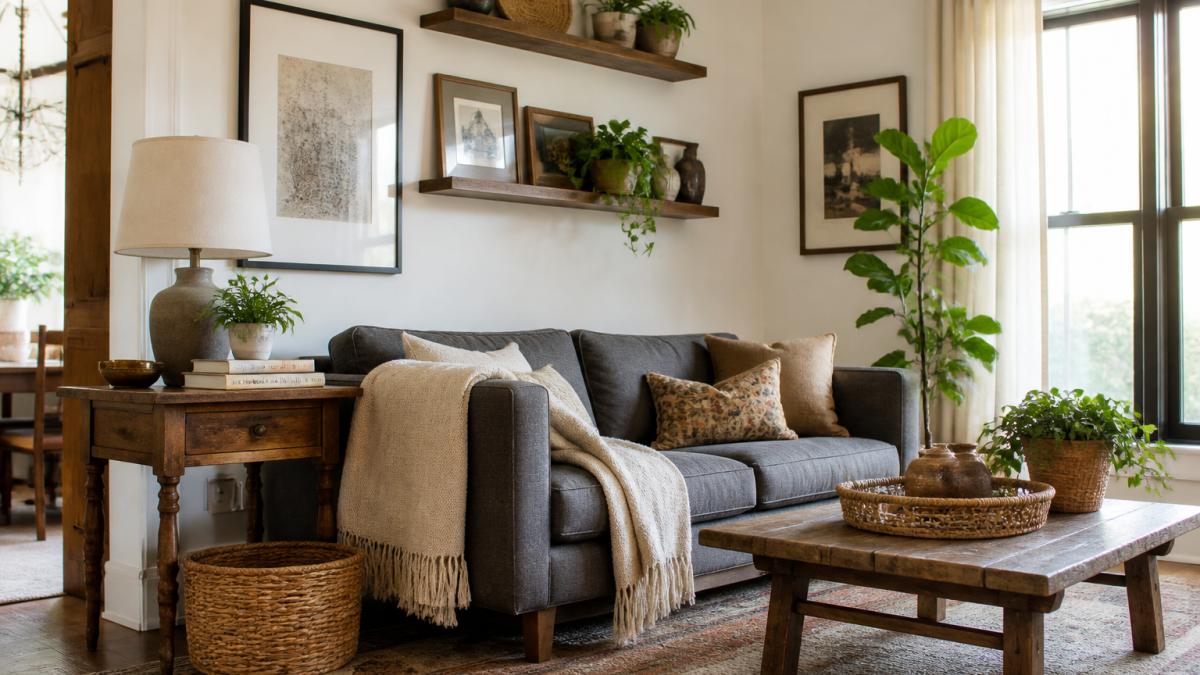
Mixing home decor styles sounds risky. Most people assume a cohesive room requires everything to match. That's wrong. The best rooms blend different styles intentionally.
The key is understanding that mixing styles and creating chaos are two different things. One is planned. The other is accidental.
The 80/20 Rule for Cohesive Mixing
The 80/20 rule is your permission structure for mixing styles. Let one style dominate 80 percent of your space. Use other styles for the remaining 20 percent.
Here's how it works in practice:
- 80% modern, 20% vintage: Modern furniture and clean lines form your foundation. Add vintage art, an antique mirror, or heirloom pieces for character.
- 80% Bohemian, 20% contemporary: Layered textiles, natural materials, and eclectic art define your space. Include one or two sleek, modern pieces to ground the look.
- 80% traditional, 20% modern: Classic furniture and formal arrangements set the tone. Introduce a contemporary art piece or modern lighting fixture for freshness.
This ratio prevents your room from feeling confused. The dominant style creates visual coherence. The secondary style adds personality and prevents boredom.
Using Color Palettes to Unify Different Styles
Color is the strongest unifying tool in design. When different styles share a color palette, they feel intentional rather than random.
Choose 2-3 main colors and 1-2 accent colors. Repeat these colors throughout your space in different forms:
- Paint on walls
- Fabric on furniture
- Natural textiles like linen and knit fabrics
- Decorative objects and accessories
- Art and wall decor
When you repeat colors across different style periods and materials, your room feels cohesive even though the furniture might be wildly different.
For example, a room mixing modern and vintage pieces feels unified when everything works within a muted pastel or neutral palette. The color story ties the styles together.
How to Choose Art and Decor for Your Home
Art and decorative objects are where your personality shows. They're also where many people make costly mistakes by buying things they don't love or that don't fit their space.
Selecting Pieces That Tell Your Story
The best decor isn't what's trendy. It's what's meaningful to you. A room filled with objects you genuinely love tells a story about who you are.
Before buying art or decor, ask yourself:
- Does this piece speak to me emotionally?
- Will I still love this in two years?
- Does it fit the 80/20 style ratio I'm building?
- Does it work within my color palette?
- Is it the right scale for the space?
This approach filters out impulse purchases that look good in the moment but create regret later.
Seek pieces that have a story. They don't need to be expensive.
At Forth & Nomad, we curate pieces designed to prompt your vision and help you think differently about your environment. When you choose art and decor with intention, your space becomes a reflection of what matters to you.
Layering Textures, Fabrics, and Materials
Texture is what makes a room feel rich and inviting. A space with only smooth, hard surfaces feels cold. Layering different textures creates warmth and visual interest.
Introduce texture through:
- Natural textiles: Linen, cotton, wool, and knit fabrics add softness and warmth
- Wood: Different wood tones and finishes add organic variety
- Metal: Brass, copper, or matte black metals provide contrast
- Ceramics and glass: These materials catch light and add sophistication
- Plants and natural elements: Living elements bring organic texture and movement
Layer these materials intentionally. Pair a smooth ceramic vase with a rough linen throw. Combine polished metal with matte wood. Let soft knit fabrics sit next to sleek glass surfaces.
The goal is creating depth. When someone looks at your room, their eye should travel across different textures and materials that feel intentional together.
Unique Home Decor Ideas for Every Budget
You don't need a large budget to style unique home decor. What you need is intention and patience.
Building a Cohesive Look Without Breaking the Bank
Start with what you have. Edit your existing decor first. Remove pieces that don't fit your vision. Rearrange furniture to create better flow. You'd be surprised how much impact this has.
When you're ready to add new pieces, prioritize:
- Foundational pieces first: Invest in quality furniture that fits your style and will last years. A good sofa or bed is worth the cost.
- Color palette items: Paint, textiles, and small decor that establish your colors are affordable ways to unify a space.
- Statement pieces: One or two striking items, art, a unique lamp, or a distinctive decorative object, create focal points without requiring many pieces.
Shop secondhand and vintage. You'll find unique pieces at a fraction of retail cost. Thrift stores, online marketplaces, and estate sales are treasure troves for one-of-a-kind decor.
Look for affordable ways to introduce texture. The Ribon Planter from Forth & Nomad brings natural texture and minimalist design to any space, made from recycled wood and corn starch, it's an affordable way to add living elements and organic texture to your shelves or desk.

Displaying Meaningful Collections and Heirlooms
Heirlooms and meaningful collections deserve to be displayed, not hidden away. The challenge is showing them in a way that feels intentional rather than cluttered.
Group similar items together. Display heirlooms by material, color, or theme. This creates visual organization and tells a clearer story.
Use shelving and wall space strategically. Floating shelves, glass cabinets, or dedicated wall areas draw attention to what matters. Pair collections with breathing room.
Mix displayed items with decorative objects that complement them.
Consider the 80/20 rule here too. If heirlooms make up 80 percent of a shelf or wall, they become the clear focal point.
Styling Small Spaces and Rentals
Small spaces and rentals require different strategies. You have less room to work with and often can't make permanent changes.
The principles remain the same: choose a dominant style, establish a color palette, and layer textures intentionally. But execution requires creativity.
In small spaces, edit ruthlessly. A single statement chair or art print creates more impact than a collection of smaller decor.

Use vertical space. Shelving, wall-mounted storage, and tall plants draw the eye upward and make rooms feel larger.
For rentals, work within restrictions. Use removable wallpaper, stick-on art, and temporary solutions. Rearrange furniture to create new layouts.
Focus on what you can control: lighting, textiles, plants, and art.
Common Mistakes to Avoid When Styling Decor
Understanding what not to do saves time and money.
Buying without a plan. Shopping without a clear vision leads to pieces that don't work together.
Ignoring scale. A beautiful piece in the wrong size overwhelms or underwhelms a space. Measure before purchasing.
Neglecting lighting. Overhead lighting alone creates a flat, uninviting space. Layer different light sources.
Overcrowding. More stuff doesn't equal better design. Leave breathing room. Negative space is a design tool, not wasted space.
Ignoring your color palette. Random colors create visual chaos. Stick to your chosen colors. Every new piece should reinforce your palette.
Forgetting about functionality. Beautiful decor that doesn't work for how you actually live creates frustration.
Styling unique home decor is about expressing who you are through your space.
At Forth & Nomad, we believe your home should reflect your vision and values. Our curated collections, from art prints to functional decor like the Ribon Planter and 5" Catch-Alls, are designed to help you build a space that feels distinctly yours.

Frequently Asked Questions
How do I make my home decor feel unique and personal when I'm still figuring out my style?
Start by collecting images of rooms and pieces you're drawn to, even if they seem unrelated. Look for patterns in color, texture, and mood rather than exact style matches. Your personal style emerges from what genuinely speaks to you, not from following a predetermined aesthetic. Invest in one or two statement pieces, like an art print or decorative object, that feel authentically yours, then build around them. Forth & Nomad's curated collections, including pieces like the Totem Shape Face Art Print ($14.99), help you discover elevated designs that reflect your emerging taste without requiring a fully formed vision.
What's the best way to mix different home decor styles without making a room feel cluttered?
Use the 80/20 rule: let one dominant style anchor the room, then introduce secondary styles through accent pieces. Repeat your chosen color palette throughout to create visual cohesion, this ties disparate styles together. Layer textures intentionally using natural materials like linen and knit fabrics rather than adding more furniture. Edit ruthlessly by displaying only pieces you truly love, and use negative space to let each item breathe. Concrete catch-alls and minimalist planters work well as functional accents that don't compete visually.
How do I display meaningful objects and artwork at home without the space looking like a gallery?
Group related items in odd numbers (three or five) rather than scattering them individually. Create visual balance by varying the heights and sizes of displayed pieces. Use shelves, wall space, and surfaces strategically to tell a story about what matters to you. Heirloom furniture and personal collections gain impact when surrounded by intentional negative space. High-quality art prints on archival paper, like the Expand Into Love Art Print ($22.99), anchor a display and elevate surrounding objects simply by association.
What's the difference between eclectic and cluttered decor?
Eclectic decor is intentional; cluttered decor is not. Eclectic spaces use a consistent color palette, repeat shapes and textures, and display only pieces with purpose or meaning. Cluttered spaces have competing colors, unrelated styles, and too many items fighting for attention. The key is curation, select fewer items but choose them thoughtfully. This is where editing becomes essential: regularly assess what you're displaying and remove pieces that no longer serve your space or story.